How Cheltenham Tree Removal Differs On Steeply Sloped Blocks
Cheltenham has plenty of properties where the backyard drops away fast, side access is tight, and a “simple” job becomes highly technical. On steep sites, Cheltenham tree removal is less about speed and more about control, planning, and protecting what sits downhill.
They will usually find that slope changes everything: how gear gets in, how timber comes down, where debris can go, and what must be protected. Done properly, Cheltenham tree removal on sloped blocks is a carefully staged process, not a single cut and drop.
What makes steeply sloped blocks so different for tree removal in Cheltenham?
Steep blocks change the physics of every movement, from climbing to rigging and landing sections. They also increase the consequences of anything that slips, rolls, or swings.
On flatter ground, crews can often drop small limbs into clear zones. On slopes, there may be no safe drop zone at all, especially if fences, decks, pools, gardens, or a neighbour’s roof sits below. That is why Cheltenham tree removal on sloping land leans heavily on controlled dismantling.
Why does access become the first major constraint on sloped sites?
Access determines which machines can be used and how the crew can work safely. On steep Cheltenham blocks, they may have narrow side paths, retaining walls, or steps that block large equipment.
If a chipper or stump grinder cannot reach the work area, the team may need to carry sections out by hand or use smaller tracked equipment that can handle incline. For Cheltenham tree removal, access planning can take longer than the cutting itself.
How do they decide whether to use cranes, elevated platforms, or rope access?
They choose the method that reduces risk while fitting the site. On many sloped blocks, an elevated work platform may not be able to stabilise, and a crane may not have a safe setup location.
Rope access and advanced rigging often become the practical option, letting arborists dismantle the tree in small pieces and lower each section into a controlled landing area. For complex Cheltenham tree removal, this decision is made after assessing ground conditions, tree weight distribution, and nearby structures.
How does rigging change when everything can roll downhill?
Rigging on a slope is designed to stop momentum. They will usually add extra friction management, use stronger anchor points, and select lowering devices that allow gradual descent rather than free drop.
Logs can behave unpredictably on a decline, especially when they bounce or pivot. A piece that would sit still on flat ground can roll into a fence, a glass balustrade, or a neighbour’s garden. That is why Cheltenham tree removal on steep blocks commonly uses tag lines, controlled swings, and designated “no-roll” landing zones.
What risks do retaining walls, fences, and downhill neighbours add?
They add impact risk and legal sensitivity. Retaining walls can crack under repeated rolling loads, fences can be crushed by swinging limbs, and downhill neighbours often have the greatest exposure.
They will usually need to treat the entire lower side as a high-consequence area, even if it is outside the client’s boundary. In many cases, Cheltenham tree removal requires clear communication about where sections will be lowered, how debris will be contained, and what will be protected.
How do wind and canopy leverage behave differently on slopes?
Wind loads are not always the same at the top and bottom of a slope, and tree crowns can catch gusts that are funnelled between homes. This matters when a climber is positioned in the canopy and when rigging points are loaded.
A tree leaning downhill can also have strong mechanical leverage in that direction, increasing the need for staged reduction rather than cutting large sections. For Cheltenham tree removal, slope often means they must assume the tree “wants” to move downhill and plan against it.
See Also : What Tree Services Pennant Hills Councils Require Before Approval
What role do soil type and drainage play in safe tree removal?
They affect stability for both the tree and the crew. Wet clay soils can become slick and unstable, while sandy soils can shift under load, especially near retaining structures.
Poor drainage on a slope can also undermine root plates over time, which changes how the tree reacts during cutting. For Cheltenham tree removal, they may schedule work around weather, adjust footwear and ground protection, and avoid machine use that could cause rutting or slip risk.
How do they protect gardens and hardscapes when there is no flat drop zone?
They rely on containment and careful landing. They may use rigging to lower pieces onto mats, timber cribs, or temporary platforms that stop bounce and roll.
Where there is little space, they may lower material directly into a truck bed or into a chipper feed area uphill. In high-finish backyards, Cheltenham tree removal often includes extra time for protection, because repairing paving, decking, or irrigation can cost far more than the removal itself.
How does traffic and street setup influence Cheltenham tree removal on sloped blocks?
Many steep sites also have challenging street frontage, including narrow roads, parked cars, and limited verge space. If they need to set up a chipper, load a truck, or position a crane, they may require a traffic management plan.
In Melbourne suburbs like Cheltenham, street logistics can dictate start times, staging areas, and how quickly debris can be moved off-site. That is why Cheltenham tree removal on slopes is often planned around both backyard access and front-street constraints. Read more about trees and development.
What are the common step-by-step methods used for steep block removals?
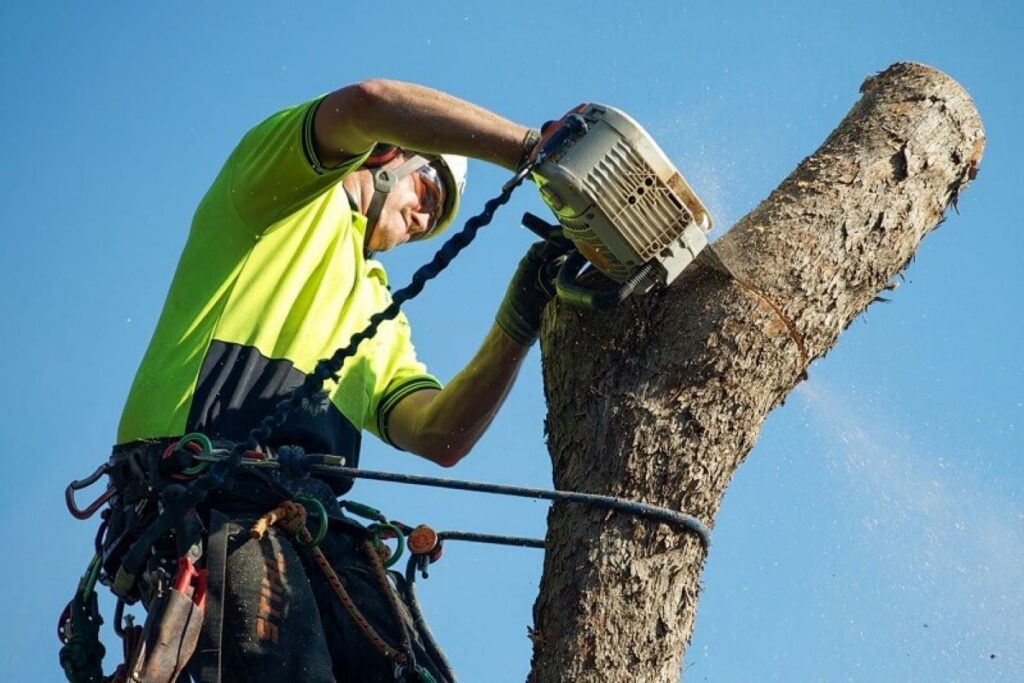
They typically use dismantling, not felling. The most common approach is sectional removal, starting with canopy reduction and working down the trunk.
A typical sequence includes: installing rigging, removing small limbs first, lowering heavier leaders in short lengths, and finishing with trunk blocking once weight is reduced. On steep land, Cheltenham tree removal is often slower but safer, because each cut is matched to a controlled lowering plan.
How do they manage debris, timber, and clean-up when everything moves downhill?
They treat debris control as a safety task, not just tidiness. Smaller branches can be bundled and carried uphill, while heavier timber is lowered and stacked in stable positions that cannot shift.
If firewood is being kept, they may cut to manageable lengths and place it where it will not roll. For Cheltenham tree removal, clean-up planning can include temporary barriers, chutes, or dedicated carry paths to stop material from migrating downhill.
What happens with stump grinding on steeply sloped blocks?
Stump grinding can be limited by machine stability and access. If they cannot get a grinder to the stump safely, they may offer alternative solutions such as stump poisoning, partial grinding, or staged grinding with smaller equipment.
They will also consider erosion control, because removing stump material on a slope can expose soil and increase runoff. In some Cheltenham tree removal jobs, stump treatment is scheduled separately so the right machine and ground conditions can be used.
Do permits or protected vegetation rules affect steep block tree work in Cheltenham?
Yes, local planning overlays and tree protection rules can apply regardless of slope. They may need to check whether a permit is required based on tree species, trunk diameter, or vegetation controls.
Even when removal is allowed, they may need to document reasons like risk, structural damage, or decline. For Cheltenham tree removal, it is common for reputable operators to guide clients through council requirements and avoid work that could trigger compliance issues.
How should they choose an arborist for steeply sloped Cheltenham properties?
They should choose someone who can explain the method, not just the price. A suitable arborist will describe access limits, the rigging plan, what gets protected, and how waste will be removed.
They should also look for appropriate insurance, qualified staff, and clear exclusions about hidden issues like unstable retaining walls or unknown underground services. With Cheltenham tree removal on steep blocks, experience is visible in the detail of the quote and the clarity of the risk controls.
What should they do before the crew arrives to reduce cost and complications?
They can prepare the site to improve access and reduce delays. Simple steps include clearing side paths, moving outdoor furniture, marking irrigation lines, and securing pets.
They should also talk to neighbours if shared boundaries or downhill exposure is involved. For Cheltenham tree removal, pre-start preparation often shortens the time on-site and reduces the chance of last-minute changes.
What does a realistic timeline and cost range look like on steep sites?
Steep sites usually take longer because each section is lowered and handled carefully. Costs can rise due to labour intensity, specialised rigging, limited machine access, and higher protection needs.
They should expect the quote to reflect setup time, sectional dismantling, and controlled debris removal rather than fast felling. In many Cheltenham tree removal projects on slopes, the safest plan is not the cheapest plan, but it is the one that prevents property damage and injury.
What are the key takeaways for Cheltenham tree removal on steeply sloped blocks?
Steep blocks demand planning, controlled rigging, and strong site protection from the first cut to the final clean-up. They will usually see the best outcomes when the job is treated as an engineered removal rather than basic cutting.
When they engage experienced operators, Cheltenham tree removal on sloped land can be completed cleanly and safely, even with tight access and sensitive downhill boundaries.